
What's worse than stepping on a lego? Nothing. But plantar fasciitis might be a close second!
One of the most common conditions we treat is plantar fasciitis.
As the weather improves and activity levels start increasing again, people begin walking more, running more, training for races, working outside more, and generally spending more time on their feet. That increase in activity often exposes issues that may have been building for months.
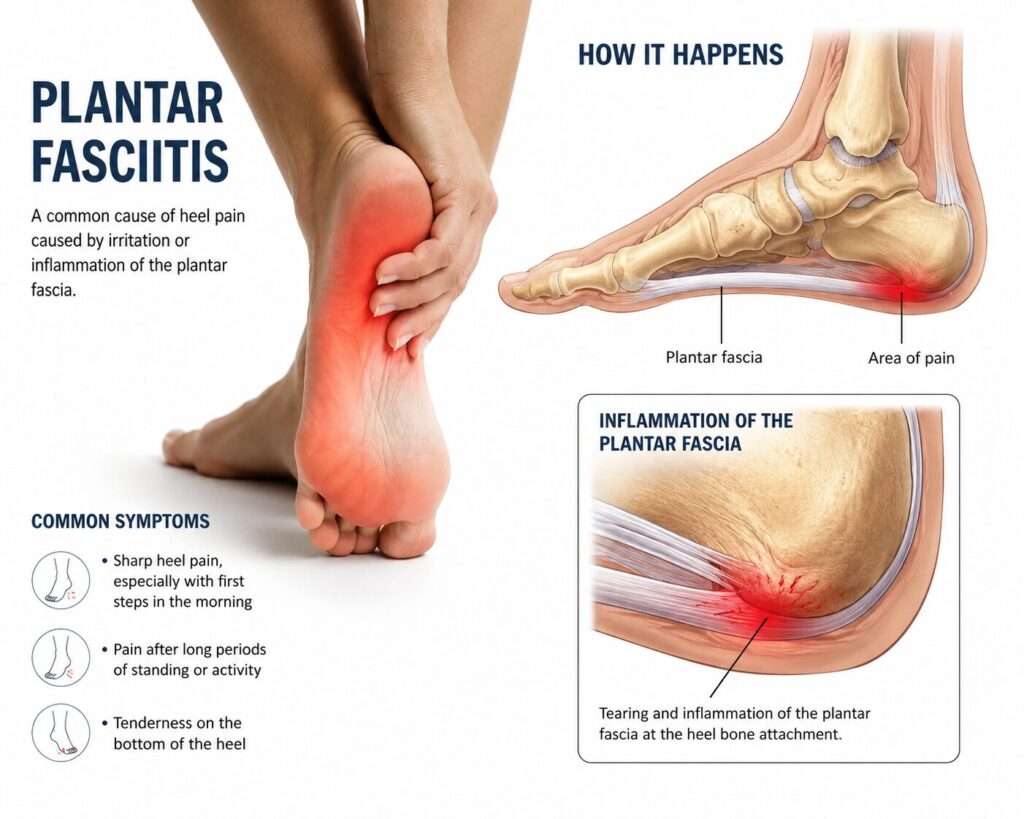
A recent clinical success story from this past week involved a patient dealing with significant plantar fasciitis while training for an upcoming half marathon.
After increasing running volume again following the winter months, the patient developed intense pain on the bottom of the foot — especially first thing in the morning and during longer periods of walking and running.
This wasn’t the first time they had dealt with it either.
They had previously been diagnosed with plantar fasciitis and had even received cortisone injections in the past, but the issue continued to return.
During evaluation, the plantar fascia itself was definitely irritated and painful, but there were also major contributing factors elsewhere — particularly significant calf tightness, calf weakness, and Achilles tendon involvement.
That’s something we commonly see with plantar fasciitis.
A lot of treatment approaches focus only on the painful area itself, but if the calf muscles and Achilles tendon are stiff, weak, or not functioning well, the plantar fascia often continues to get overloaded repeatedly.
In other words, the bottom of the foot may be where the pain is showing up, but it is not always the only area contributing to the problem.
Treatment in this case involved:
The goal wasn’t just temporary pain relief.
The goal was to improve the quality and capacity of the tissue while also addressing the underlying mechanical factors contributing to the problem in the first place.
After five sessions, the patient was able to continue training pain-free and keep their race date unchanged.
One important thing worth mentioning is that plantar fasciitis is not just a “runner’s problem.”
Yes, runners commonly deal with it, especially during periods of increased training volume, but we also see it in:
In other words, you do not have to be an athlete to deal with plantar fasciitis.
It’s an extremely common condition, but it’s also something people often deal with for much longer than they should because the underlying contributing factors never fully get addressed.
And while injections and surgery are sometimes discussed, they are not always the only options.
In many cases, improving tissue quality, restoring mobility, improving strength, and gradually rebuilding load tolerance can make a major difference.
If you or someone you know has been struggling with ongoing foot or heel pain, know that you do not necessarily have to just “live with it.”
And as I always tell patients — even if we are not the right fit for your specific problem, we will always point you in the right direction and hand you off to the best of the best.
You can book an appointment through our online scheduler linked here.